
10 Critical Steps for Supplier Auditing in Turkey: A Buyer’s Guide
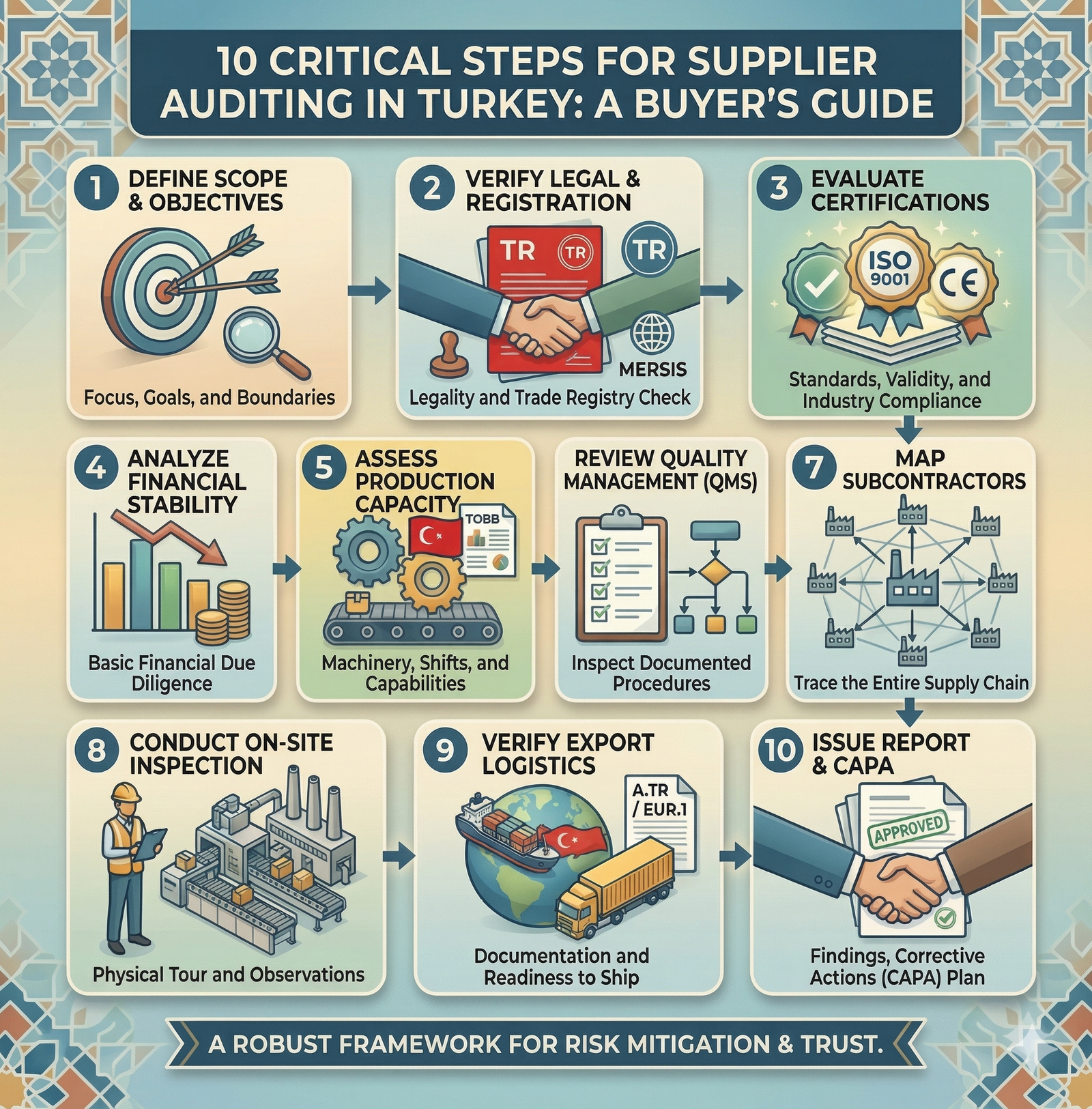
Finding a manufacturing partner with a great catalog is easy. However, ensuring that the factory can consistently deliver on quality, capacity, and compliance requires a rigorous on-the-ground assessment. As European brands increasingly nearshore their supply chains, conducting a thorough supplier auditing in Turkey has become the ultimate risk-mitigation tool.
Drawing on over 15 years of supply chain operations management, here is the definitive 10-step checklist to evaluate Turkish manufacturers before you sign a contract.
Phase 1: The Desk Audit (Before You Fly)
1. Verify Legal and Financial Standing Before engaging in deep negotiations, confirm the company’s official registration with the local Chamber of Commerce (e.g., Istanbul Chamber of Industry). Furthermore, running a basic financial health check ensures you aren’t partnering with a firm facing bankruptcy.
2. Validate Certifications (Don’t Just Trust the PDF) Many suppliers claim to have ISO 9001, or industry-specific standards like GOTS and Oeko-Tex for textiles, or BRC for food production. Crucially, you must verify the authenticity and expiration dates of these certificates directly with the issuing bodies.
3. Analyze Technological and ERP Integration A modern supply chain requires transparent data flow. Ask about their internal systems. A supplier utilizing robust data tools like SAP, Oracle, or even properly structured Power BI dashboards will offer significantly better production tracking and inventory management.
Phase 2: The Production and Quality Audit
4. Assess True Production Capacity A common pitfall is a factory overpromising its output. You must evaluate their machinery, number of shifts, and current commitments to other clients. If you are ordering heavy industrial machinery parts or large volumes of aseptic tomato paste, can their physical infrastructure handle your peak season?
5. Evaluate Quality Control (QC) Systems Examine their standard operating procedures for both in-line and final inspections. Specifically, look for a dedicated QC team that operates independently from the production manager to avoid conflicts of interest.
6. Map the Sub-contractor Network Does your supplier actually make the product, or do they outsource the difficult steps? Transparency here is non-negotiable. If they use sub-contractors, your audit must extend to those secondary facilities as well.
7. Trace Raw Material Sourcing A resilient supply chain starts at the source. Investigate where the factory buys its raw materials (yarn, steel, agricultural produce) to ensure those inputs meet your quality and ethical standards.
Phase 3: Compliance and Logistics
8. Social Compliance and Workplace Safety European buyers are strictly bound by ESG criteria and the EU Green Deal. An effective supplier auditing in Turkey must include a physical check of working conditions, fire safety, and fair labor practices to protect your brand’s reputation.
9. Review Export Experience and Logistics Readiness Producing a great product is only half the battle; getting it to Europe is the rest. Check their familiarity with EU customs union documentation (ATR certificates) and their packaging standards for international road or sea freight.
10. Conduct an Unannounced Physical Walkthrough The most critical step is the physical site visit. A glossy showroom can hide a disorganized factory floor. Walking the production line reveals the true culture of the facility—from tool organization to worker hygiene.
Conclusion: Securing Your Supply Chain
Ultimately, skipping a thorough audit to save time usually results in catastrophic costs later. Partnering with a local sourcing agent allows you to conduct these rigorous checks without the expense of constant international travel.
At Mopcons, we act as your eyes and ears on the ground. If you need expert assistance with supplier auditing in Turkey, explore our sourcing agent service to secure a resilient and high-quality manufacturing partner today.
Food sourcing requires the same rigour. Read our tomato paste case study.
Olive oil sourcing requires the same rigour. Here is what buyers miss.
Need help with sourcing or trade in Turkey?
Talk to a MOPCONS consultant — we handle export, import, sourcing, representation and contracts end to end.
Related Articles
 Business
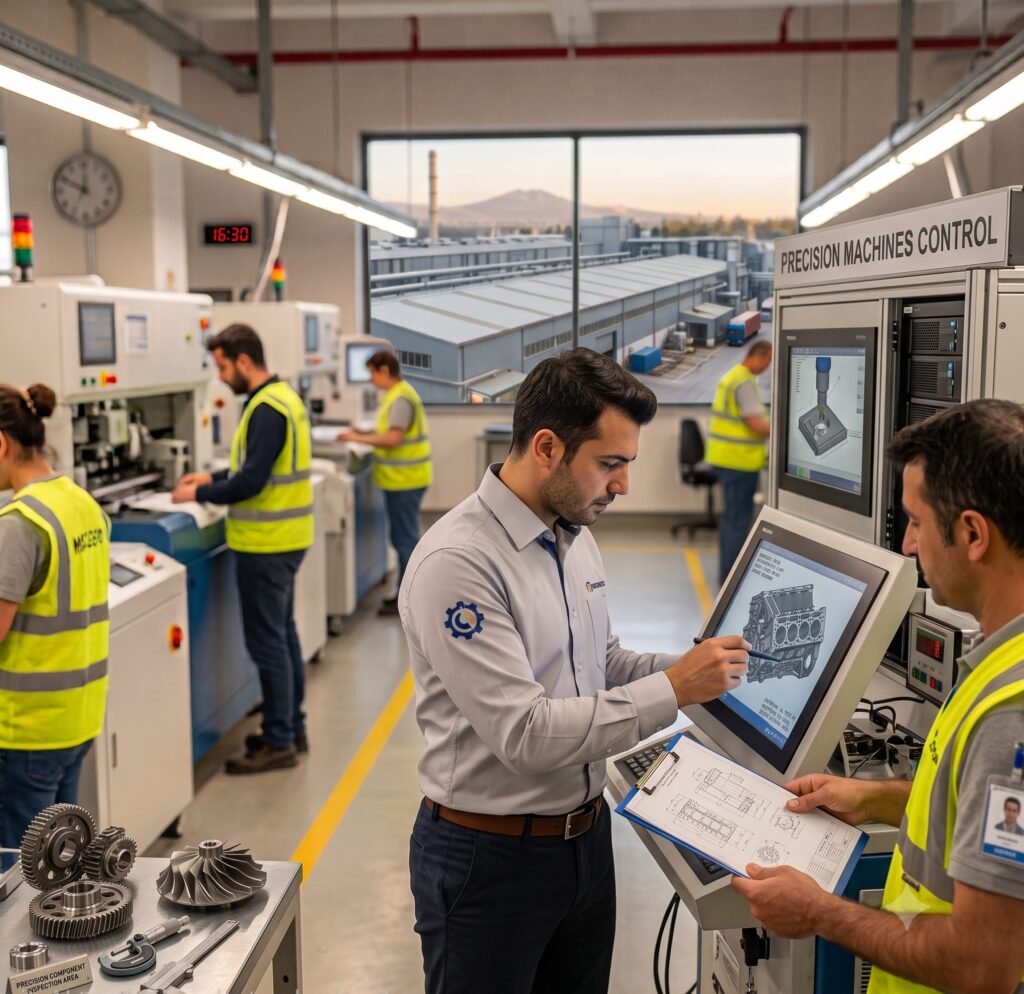
The Cost of Not Having a Local Rep in Turkey
A buyer paid thousands of euros to a sourcing agent who was not based in Turkey. No factory knew him. Here is…
Read article →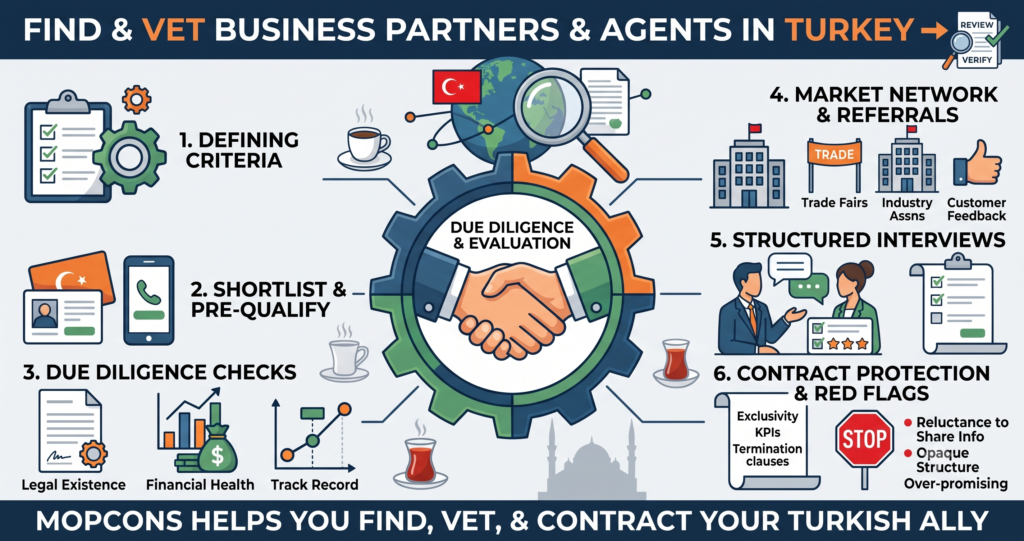 Business
How to Find and Vet a Business Partner in Turkey
A step-by-step method for foreign firms to find, vet and safely contract a reliable business partner or agent in Turkey.
Read article →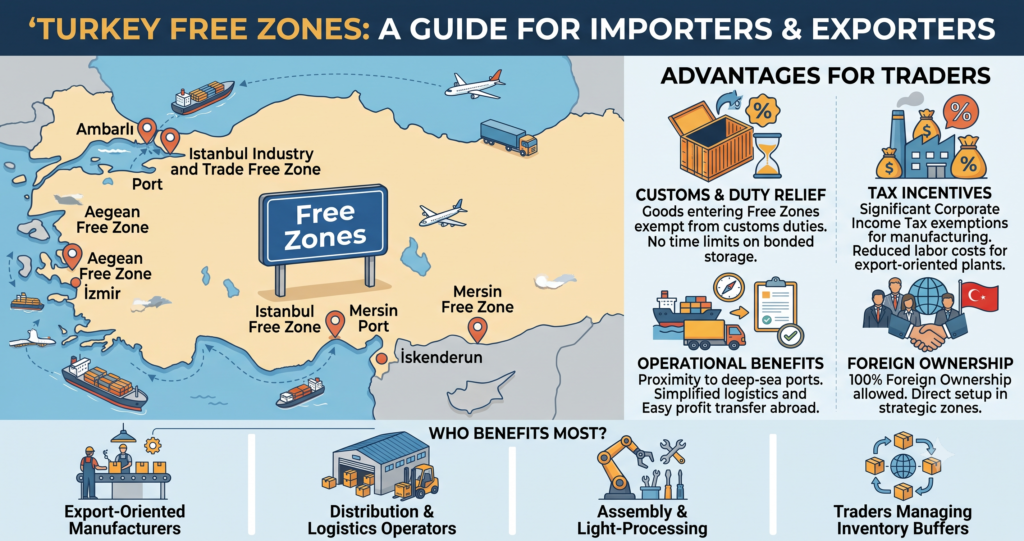 Business
Turkey Free Zones: A Guide for Importers and Exporters
How Turkey's free zones cut customs duties and taxes for importers, exporters and manufacturers, and how to choose the right one.
Read article →