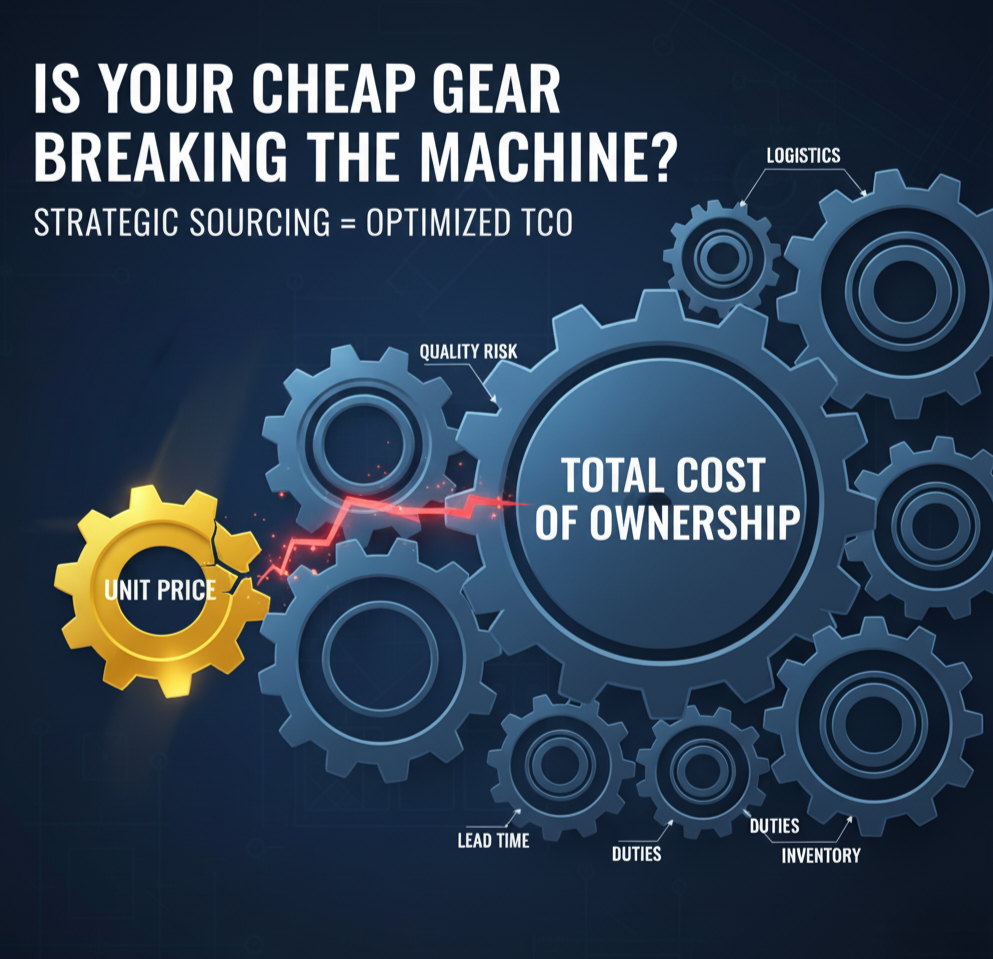
When global procurement managers look for new suppliers, the initial quote is often the only number on the table. However, focusing solely on the “Ex-works” price is a common trap. To build a truly resilient supply chain, you must calculate the Total Cost of Ownership (TCO) in sourcing.
What is Total Cost of Ownership (TCO)?
In simple terms, TCO is an analysis that includes all costs associated with the life cycle of a product—not just the purchase price. In international trade, this includes logistics, customs duties, quality control, and the “cost of time.” Furthermore, failing to account for these hidden variables can turn a “cheap” deal into a financial burden.
The Hidden Costs of Long-Distance Sourcing
While manufacturing hubs in distant regions may offer lower labor costs, the TCO often tells a different story. For example, when sourcing from Asia to Europe, you must consider:
- Logistics and Freight: Sea freight costs are volatile. Long transit times also tie up your capital in “floating inventory.”
- Quality Control Risks: If a defect is found in a shipment that traveled six weeks, the cost of replacement or rework is astronomical.
- Administrative Overhead: Managing suppliers across massive time zones requires more man-hours and communication effort.
Consequently, many firms are adopting a China Plus One strategy, looking for partners closer to home to bring these hidden costs under control.
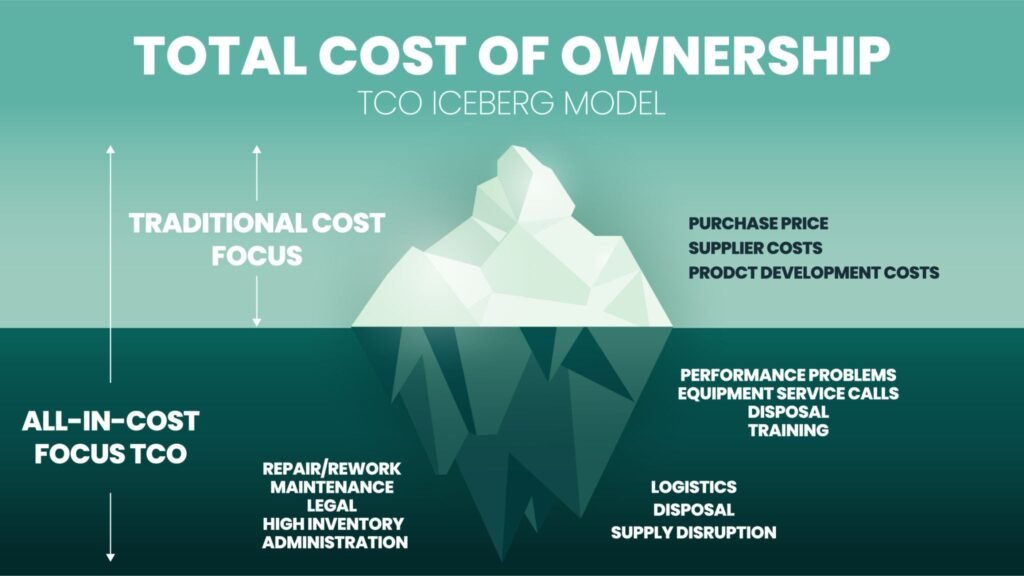
The purchase price of 15 percent above water or surface. The hidden cost of 85 percent is underwater.
Why Turkey Wins the TCO Battle
From a TCO perspective, Turkey offers a unique competitive advantage for European buyers. Specifically, the proximity allows for “Nearshoring,” which drastically reduces several cost layers:
- Lower Inventory Carrying Costs: Shorter lead times mean you don’t need to hold months of safety stock.
- Reduced Travel and Audit Costs: It is much more cost-effective to send a team—or a Sourcing Agent—to audit a factory in Istanbul than one in a remote province across the globe.
- Customs Union Benefits: For EU-based companies, sourcing from Turkey eliminates many of the duties and complex paperwork associated with other regions.
Risk Mitigation as a Cost Saver
Moreover, the cost of a “supply chain break” is the most expensive line item of all. A supplier that is 4,000 miles closer is inherently more resilient. Therefore, by choosing a hub with high manufacturing standards and geographical proximity, you are essentially buying “supply chain insurance.”
For those interested in professional standards, the Chartered Institute of Procurement & Supply (CIPS) provides extensive frameworks on how to calculate these metrics effectively.
Conclusion: Making Smarter Procurement Decisions
Ultimately, the goal of modern procurement is not to find the lowest price, but the lowest TCO. By looking at the full picture, Turkey consistently emerges as the most cost-effective partner for high-quality, agile manufacturing.
At Mopcons, we leverage over 15 years of supply chain expertise to help you calculate these risks and optimize your procurement strategy. If you are ready to move beyond the unit price and secure your supply chain, explore our Sourcing Services today.