
Verify a Turkish Supplier: 2026 Checklist
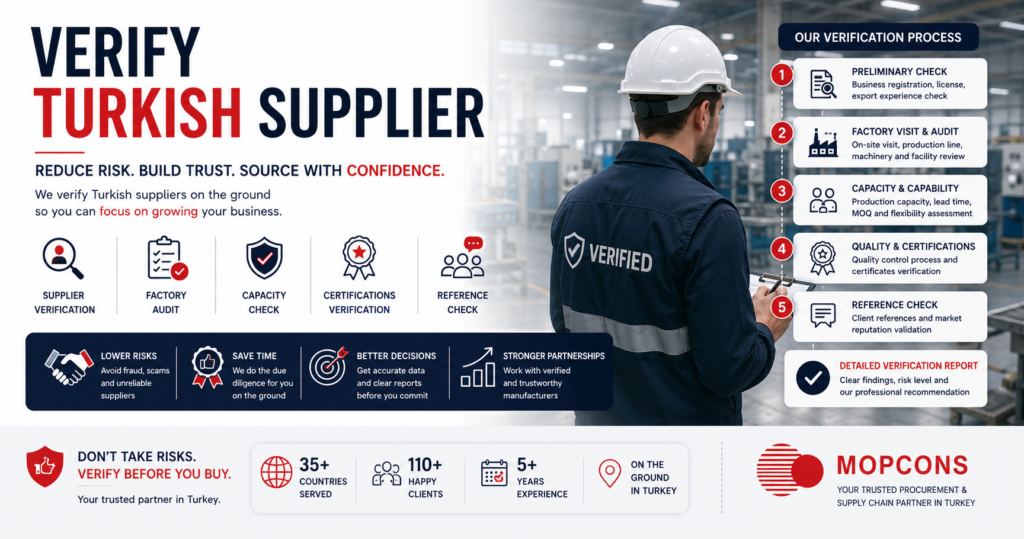
With more than 890,000 registered exporters in Turkiye, the hardest part of sourcing is not finding a supplier – it is knowing which one to trust. Learning how to verify a Turkish supplier before you transfer a deposit is the single most effective way to avoid delayed shipments, quality disputes and outright fraud. This 2026 checklist is the exact due-diligence process our team at MOPCONS runs before a client places an order.
Why supplier verification matters more in 2026
As global buyers shift volume to Turkiye for nearshoring, the number of trading companies and brokers posing as manufacturers has grown. A polished website and fast quotes prove nothing. Verification separates genuine factories with real capacity from middlemen who inflate price and lose control of quality. It also protects you legally: a properly vetted, contracted supplier is far easier to hold accountable.
Step 1: Confirm legal identity and registration
Every legitimate Turkish company has a tax number (vergi numarasi) and a trade registry record. Ask for and cross-check:
- Official company title and trade registry (Ticaret Sicil) number
- Tax number and the tax office where it is registered
- Chamber of Commerce or Industry membership
- Export activity records – a real exporter belongs to a sector union under TIM
Make sure the bank account you are asked to pay matches the registered company name exactly. A mismatch between the company and the account holder is a major red flag.
Step 2: Distinguish a manufacturer from a trader
Both have their place, but you should know which you are dealing with. Ask targeted questions:
- What is the factory address, and does it differ from the office address?
- What is your monthly production capacity for this item?
- Which machines and how many production lines do you run?
- Can you share your capacity utilisation and current lead time?
A real manufacturer answers these instantly. A trader hesitates or redirects. Request dated photos or a live video walkthrough of the production floor.
Step 3: Audit the factory
Documents can be forged; a factory floor cannot. Where budget allows, commission a physical audit through SGS, Bureau Veritas, Intertek or a local sourcing agent. A good audit confirms:
- The site exists at the stated address and is operational
- Machinery and workforce match claimed capacity
- Quality management and certifications (ISO 9001, CE, Oeko-Tex, BRC) are genuine
- Working conditions meet the compliance standards your market requires
Check certifications at the source
Do not accept a PDF at face value. Certification bodies maintain online registries; verify the certificate number directly with the issuer to confirm it is current and covers the right product scope.
Step 4: Test with samples and references
Always order paid samples before a bulk run, and test them against your written specification – not against a marketing photo. In parallel, ask for two or three references from existing export customers in your region and actually contact them. Genuine suppliers are proud to connect you.
Step 5: Protect the transaction
Verification continues into how you pay and inspect:
- Use a bilingual contract with clear specifications and penalties
- Stage payments: a deposit, then the balance against a passed pre-shipment inspection
- Book an independent pre-shipment inspection before the container is sealed
- Consider a letter of credit for large first orders
Red flags that should stop a deal
- Prices far below the market with no explanation
- Pressure to pay 100% in advance or to a personal account
- Refusal to allow inspection or a factory visit
- Vague answers on capacity, address or certifications
- Only a mobile number and a free email address, no verifiable company footprint
Frequently asked questions
How can I check if a Turkish company is real for free?
Start with the trade registry gazette and Chamber of Commerce membership, confirm the tax number, and make sure the bank account name matches the company. These basic checks are free and filter out most fraud.
Is a factory audit worth the cost?
For any order above a few thousand dollars, yes. An audit typically costs a fraction of the order value and prevents far larger losses from quality or capacity problems.
What is the difference between a manufacturer and a trading company?
A manufacturer owns production; a trading company buys and resells. Traders can be useful for consolidating small orders, but you pay a margin and have less control over quality and lead time.
Should I ever pay the full amount upfront?
No. Use staged payments tied to milestones and inspection. Full prepayment removes all your leverage if something goes wrong.
Can a sourcing agent verify a supplier for me?
Yes. A Turkey-based agent can visit the factory, confirm identity, negotiate terms and manage inspection in your language and time zone.
Verify with MOPCONS before you commit
MOPCONS acts as your eyes and ears on the ground in Turkiye. From Atasehir, Istanbul, we confirm supplier identity, audit factories, check certifications and structure secure payment terms so your first order arrives exactly as promised. Email info@mopcons.com or call +90 216 266 28 47 and we will vet your supplier before a single dollar leaves your account.
Need help with sourcing or trade in Turkey?
Talk to a MOPCONS consultant — we handle export, import, sourcing, representation and contracts end to end.
Related Articles
 Blog
Blog
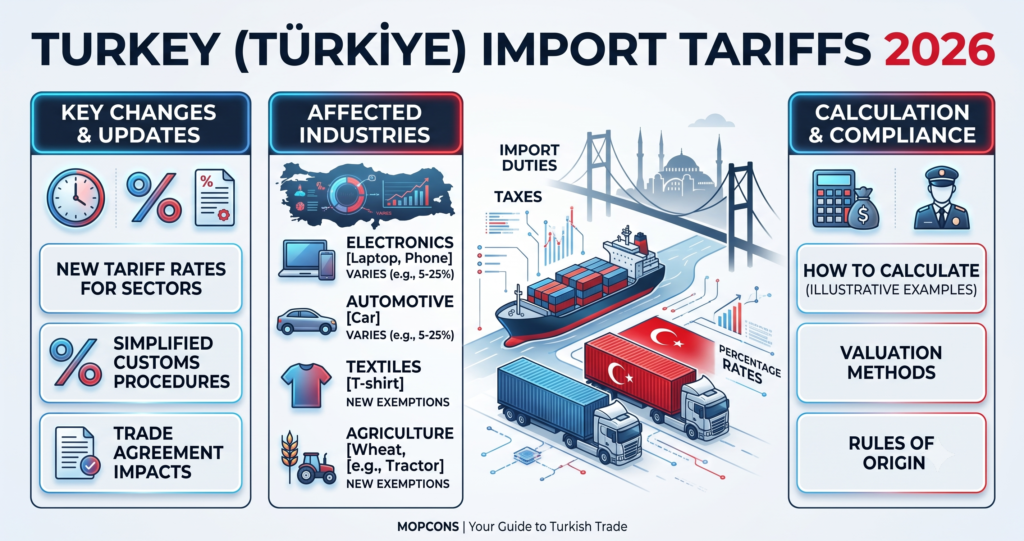
Turkey Import Tariffs 2026: Duty & Cost Guide
Getting Turkey import tariffs 2026 right is the difference between a profitable order and a margin surprise at customs. Turkiye published its…
Read article → Blog
Blog
Turkey Nearshoring: Europe’s Asia Alternative
Turkey nearshoring has moved from a niche idea to a boardroom priority in 2026. After years of freight shocks, tariff volatility and…
Read article →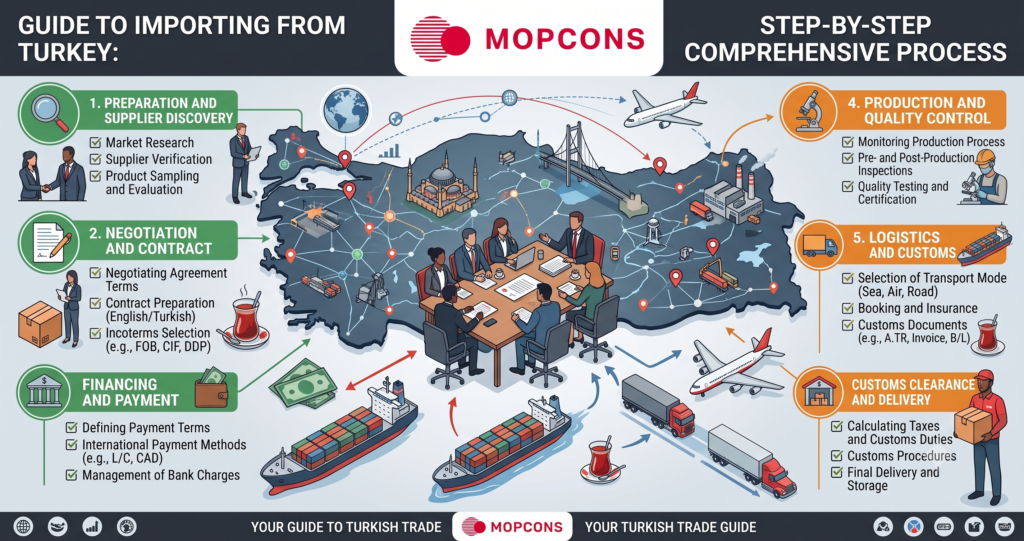 Blog
Blog
How to Import From Turkey: 2026 Buyer’s Guide
Knowing how to import from Turkey has become a competitive advantage for buyers across Europe, the United States, the Gulf and Africa.…
Read article →