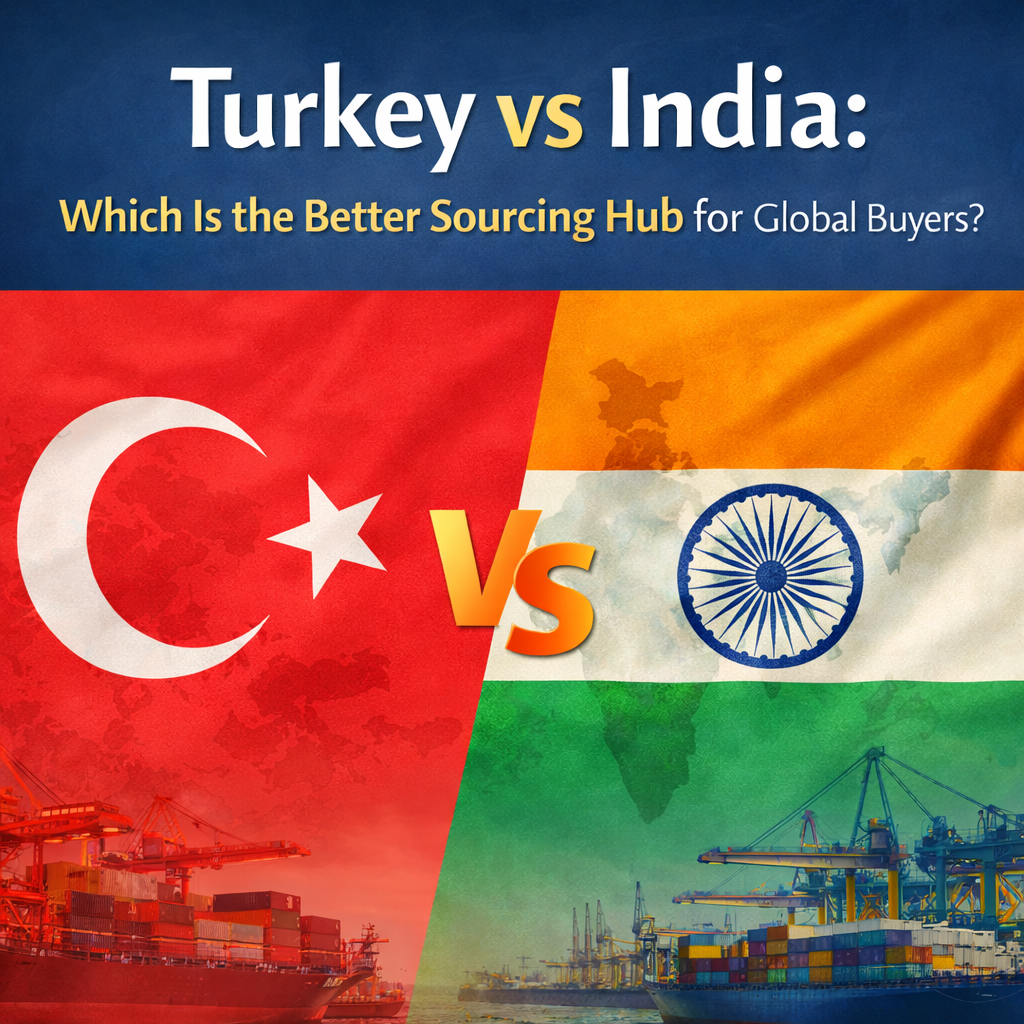
Global supply chains are rapidly shifting. When expanding their manufacturing base, procurement managers often face a critical dilemma: sourcing from Turkey vs. India. Both nations offer unique manufacturing advantages, but deciding which one is the right fit for your business requires a deeper look into logistics, scale, and overall quality.
The Nearshoring Advantage: Lead Times and Logistics
Firstly, let’s examine the geographical advantage. Turkey’s strategic location acts as a natural bridge between Asia and Europe, making it an undisputed leader in nearshoring. For instance, transporting a shipment from Istanbul to Germany takes just a few days via road freight. On the other hand, ocean freight from Mumbai to major European ports can easily take four to six weeks. Consequently, if speed-to-market and avoiding supply chain disruptions are your top priorities, Turkey holds a massive edge.
Production Flexibility and Managing MOQs
In addition to lead times, production flexibility is a major deciding factor. Indian manufacturers typically operate on massive economies of scale, which means they often demand very high Minimum Order Quantities (MOQs). Conversely, Turkish suppliers—particularly in core industries like textiles, socks, underwear, and industrial machinery—are highly adaptable. As a result, European brands can order smaller, more frequent batches. This approach significantly reduces warehousing costs and inventory risks.
Quality Standards, Sustainability, and EU Compliance
Moreover, quality compliance and sustainability are non-negotiable in today’s market. Because Turkey is fully integrated with the EU Customs Union, its factories strictly adhere to European quality, safety, and environmental standards, such as GOTS and Oeko-Tex. Furthermore, Turkish manufacturers are highly responsive to the European Green Deal. For a broader perspective on how global sustainability regulations are shaping international trade, you can review the latest reports from the World Trade Organization (WTO).
Cost-Effectiveness vs. Hidden Procurement Risks
However, India remains a powerhouse if you are sourcing massive volumes of raw materials where the bottom-line labor cost is the absolute only metric. Nevertheless, the hidden costs of long transit times, potential communication barriers, and rigid MOQs often offset these initial savings for mid-to-large-sized European buyers. The Total Cost of Ownership (TCO) is almost always more favorable when sourcing closer to home.
Conclusion: Making the Right Strategic Choice
Ultimately, Turkey provides an unbeatable combination of speed, high-quality production, and strategic flexibility. Therefore, navigating these lucrative but complex markets requires experienced local expertise to manage contracts, audit suppliers, and mitigate risks. Backed by over 15 years of professional procurement and supply chain experience, our team ensures your operations run flawlessly. If you want to optimize your supply chain securely, explore our Sourcing Agent services to see how we can protect your investments and streamline your procurement process. Besides, to learn more about sourcing from Turkey vs. India, call to us.