
Your “Italian” Olive Oil Might Be Turkish. Here’s What Every Buyer Should Know.
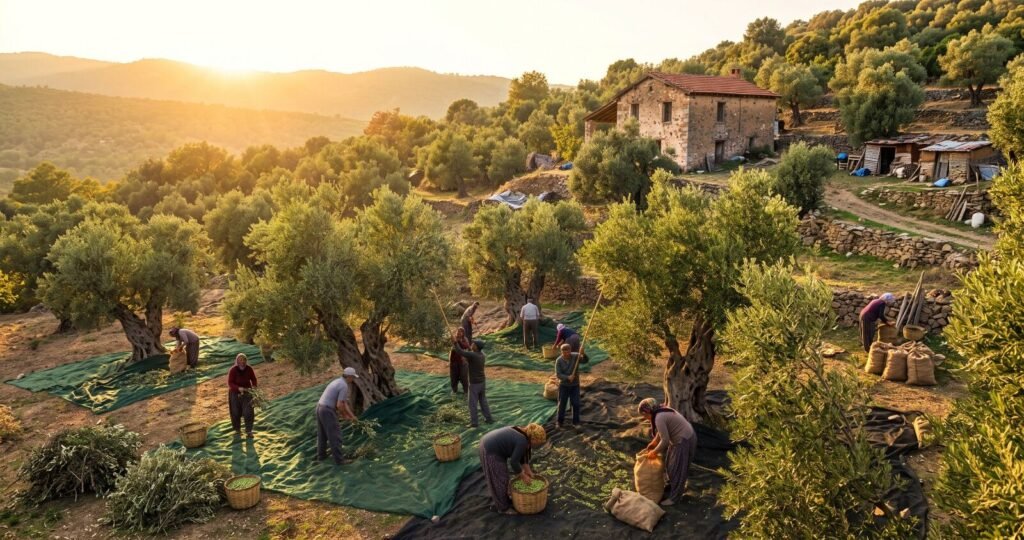
Turkish olive oil sourcing is one of the biggest blind spots in global food procurement — and once you see it, you cannot unsee it.
Pick up a bottle of olive oil in a supermarket in New York, London, or Dubai. The label says Italian. The bottle carries an Italian name, Italian colours, Italian imagery. It costs a premium price.
There is a reasonable chance the oil inside is Turkish.
Or Greek. Or Tunisian. Or Spanish. Blended in Italy, bottled in Italy, labelled as Italian — and exported to the world as one of the most trusted food brands on the planet.
This is not fraud in the conventional sense. Under current EU olive oil labelling regulations, olive oil can legally be labelled as Italian if it is processed and bottled in Italy — even when the raw oil arrived in bulk from another country. The practice is legal, widespread, and decades old.
What changed is that Turkey decided it had had enough of it.
1. Turkey: The Olive Oil Giant Nobody Talks About
Turkey is the world’s second largest olive oil producer. In the 2024-2025 season, Turkey produced approximately 505,000 tonnes of olive oil — 58% above its seasonal average, and ahead of Italy’s output for the same period. Turkey is also the world’s largest producer of table olives.
Yet most international buyers do not associate Turkey with olive oil. They associate it with Italy. Or Spain. Or Greece.
The reason is structural, not qualitative. Turkey, like Greece and Tunisia, historically sold the majority of its olive oil in bulk to Italian bottlers. Italy imported the raw oil cheaply, blended it with small quantities of Italian-origin oil, bottled it under Italian brand names, and exported it worldwide at a significant premium.
The result was a global perception that Italian olive oil was the gold standard — built substantially on the backs of Turkish, Greek, and Tunisian producers who received bulk commodity prices while Italian brands captured the retail margin. International Olive Council data tracks the production side of this picture clearly. The value side is harder to see, because it disappears into the bottling country.
How significant is the blending practice?
Greece alone loses an estimated $350 million annually in revenue, because 75% of its bulk olive oil exports go to Italy — where they are blended, bottled, and sold as premium Italian oil at a 25% markup. Turkey’s situation was comparable, until the government acted.
2. Turkey’s Response: The Bulk Export Ban
In August 2023, Turkey’s Ministry of Trade took a decisive step. It banned the export of bulk and barrel olive oil entirely.
The official rationale was domestic price stability. Bulk exports had surged as European production collapsed under drought, pushing Turkish domestic prices sharply higher. That part is true. However, the ban carried a second, strategic dimension that the ministry was explicit about: it wanted to shift Turkey’s olive oil exports from bulk commodity to branded, packaged product.
In other words, Turkey wanted to stop feeding the Italian blending machine — and start building its own premium olive oil brands instead.
This was not a minor policy tweak. The ban was imposed three times in three years, each time reflecting the same underlying tension: Turkish producers were generating volume that Italian brands were monetising at a multiple of the farm-gate price.
Then the pressure reversed. In June 2024, after intense lobbying from producers and exporters, the Ministry partially relaxed the ban — releasing a quota of 50,000 tonnes of bulk exports until November 2024, as documented in the USDA Foreign Agricultural Service report on Turkey. The full ban was subsequently lifted in November 2024, following a bumper harvest and high domestic inventory levels.
By 2025, Turkey’s olive oil exports had surged to 160,000 tonnes — a 132% increase. Turkish producers finally had both the supply and the regulatory freedom to compete directly in export markets.
3. What This Means for the Global Olive Oil Market
Turkey’s shift from bulk supplier to branded exporter matters — for the global market, and for anyone sourcing olive oil internationally.
The Italian premium is under pressure
For decades, the Italian olive oil premium rested on a supply chain that most consumers never saw. As Turkish, Greek, and Tunisian producers build their own branded export capability, that premium now faces genuine competition from origin-labelled alternatives at lower price points — with equal or superior quality.
Turkey aims to exceed $1 billion in olive oil exports annually. To get there, it needs to sell branded Turkish olive oil directly into end markets, not bulk oil to Italian bottlers. That shift is already underway.
Supply volatility is a real risk
Turkish olive oil production is highly cyclical. The 2024-2025 season delivered 505,000 tonnes. Forecasts for 2025-2026 place output at approximately 290,000 tonnes — a 43% decline, returning to normal levels after an exceptional year. This year-to-year swing is characteristic of olive cultivation across the Mediterranean, and it drives both price and availability.
Therefore, buyers building a sourcing strategy around Turkish olive oil need to plan for the cycle, not the snapshot. A long-term supply agreement negotiated in a record production year looks very different in a below-average one. Understanding the harvest cycle, and modelling the total cost of sourcing rather than the headline price per tonne, is essential for any Mediterranean origin.
Direct sourcing from Turkey is now possible
With the bulk export ban lifted and Turkish producers actively building export relationships, buyers who previously reached Turkish olive oil only through Italian intermediaries can now source it directly. That direct relationship removes the Italian margin, delivers full traceability, and — for buyers who need origin transparency for their end consumers — eliminates the ambiguity of multi-origin blending. In practical terms, Turkish olive oil sourcing has stopped being an indirect exercise conducted through a third country.
4. Turkish Olive Oil: What Buyers Need to Know About Quality
The old narrative — Italian is premium, Turkish is commodity — is badly out of date. Turkey’s Aegean region, particularly around İzmir, Aydın, Muğla, and Manisa, produces extra virgin olive oil that scores consistently well in international competitions and blind tastings.
Key quality parameters
When evaluating Turkish olive oil, the same parameters apply as for any origin:
- Acidity level — extra virgin requires below 0.8% free fatty acids. Request a certificate of analysis for every batch.
- Peroxide value — a freshness indicator. Lower is better; above 20 meq/kg signals degradation.
- Polyphenol content — Turkey’s Ayvalık, Memecik, and Gemlik varieties are naturally high in polyphenols, which drive health positioning.
- Harvest year — olive oil degrades over time. Always confirm the harvest year and request best-before documentation.
- Cold press certification — verify this is actual cold extraction (below 27°C), not a marketing claim.
Turkish olive varieties worth knowing
Turkey’s native varieties produce distinctive flavour profiles that premium markets increasingly value:
| Variety | Region | Profile | Typical use |
|---|---|---|---|
| Ayvalık | Northern Aegean | Fruity, medium intensity | One of Turkey’s most exported varieties |
| Gemlik | Bursa and Marmara | Distinctive, characterful | Strong domestic consumption |
| Memecik | Southern Aegean | Light, delicate, mild | Popular where a gentle profile is needed |
| Nizip Yağlık | Southeastern Turkey | High yield | Primarily bulk production |
For buyers building a premium or origin-story positioning, Ayvalık and Memecik from the Aegean offer genuine differentiation: a specific place, a specific variety, a traceable supply chain.
5. How to Source Olive Oil Directly from Turkey
Turkish olive oil sourcing done directly — rather than through Italian or Spanish intermediaries — means navigating a supplier landscape that is fragmented between large cooperatives, mid-size processors, and smaller estate producers.
Types of Turkish olive oil suppliers
- Large cooperatives — TARİŞ is the most prominent, aggregating production from thousands of small growers across the Aegean. High volume, consistent quality, strong export infrastructure.
- Mid-size processors — independent mills and bottling facilities working with regional growers. Often more flexible on specifications and private label requirements.
- Estate producers — small-scale, single-origin producers. Premium positioning, lower volumes, higher prices. Suitable for specialty retail or premium private label.
What to verify before placing an order
- Export licence and certifications — ISO 22000, organic certification where required, halal certification for Middle East markets.
- Laboratory analysis — independent third-party testing of acidity, peroxide value, and sensory profile before you commit to volume.
- Traceability documentation — origin, variety, harvest year, mill location.
- Packaging capability — for private label, confirm minimum order quantities, label printing capability, and bottle format options.
- Payment terms and contract structure — clear milestone payments tied to delivery and quality confirmation.
The verification discipline here is not olive-oil-specific. It follows the same sequence we set out in our supplier auditing guide: document check, facility visit, sample test, trial order, then volume.
As with any agricultural commodity, we recommend working with a sourcing agent in Turkey who maintains live relationships with processors and cooperatives in the key producing regions. The Turkish olive oil market has its own supplier dynamics, seasonal pricing patterns, and quality variation — all best navigated with on-the-ground knowledge.
6. The Supply Chain Transparency Opportunity
Across European and North American markets, consumers increasingly want to know exactly where their food comes from, how it was produced, and who produced it. Olive oil is unusually well placed to benefit from that trend, precisely because of the historical confusion around labelling.
A buyer who sources directly from a Turkish estate or cooperative can offer end consumers something a blended Italian product structurally cannot: a single origin, a named variety, a verifiable harvest year, and a direct relationship with the producer. In a market where trust carries real commercial value, that is a genuine competitive advantage.
Our tomato paste sourcing case study made the same point from a different angle: price is one variable, but transparency, certification, and supply chain reliability usually determine the right decision. Olive oil is no different.
The Bottom Line
Turkey produces world-class olive oil. It has done so for centuries. The reason most buyers do not know this is not quality — it is the structural economics of a supply chain that routed Turkish bulk oil through Italian bottlers for decades.
That structure is now changing. Turkey’s export ban, its strategic push toward branded exports, and the surge in direct export volumes through 2025 all point the same way: Turkish olive oil is coming to market under its own name, at competitive prices, with full traceability.
So for anyone weighing Turkish olive oil sourcing today — whether for private label, food manufacturing, retail, or hospitality — this is the moment to evaluate Turkey directly. The quality is there. The supply is there. And the opportunity to build a direct producer relationship, before the rest of the market catches up, is real.
Sourcing olive oil from Turkey? MOPCONS works with international buyers sourcing food products directly from Turkish producers. We identify qualified suppliers, verify certifications, arrange sample testing, and manage the sourcing process on the ground in Turkey. Get in touch to discuss your brief.
Turkey dominates hazelnuts the same way it dominates olive oil — read why it matters for buyers.
Turkey dominates rose oil the same way it dominates olive oil. Read the full story.
Frequently Asked Questions
Is Turkish olive oil as good as Italian?
Quality depends on the specific producer, variety, and harvest year — not the country label. Turkey’s Aegean region produces extra virgin olive oil that regularly ranks among the world’s best in international competitions. The historical association of Italy with quality reflects branding and distribution, not a fundamental quality difference.
Can olive oil legally be labelled Italian if it contains Turkish oil?
Under current EU regulations, olive oil can be labelled with the country of bottling. So oil imported in bulk from Turkey, Greece, or Tunisia and bottled in Italy can legally be sold as Italian olive oil, as long as multi-origin blending is disclosed on the label. Single-origin designations (DOP/PDO labels) are different — they require the oil to originate entirely from that region.
Why did Turkey ban bulk olive oil exports?
Turkey imposed bulk export bans three times between 2022 and 2023 to stabilise domestic prices and reduce the outflow of raw oil to foreign bottlers. The strategic goal was to shift Turkish exports from low-margin bulk commodity to higher-margin packaged and branded olive oil, keeping more value inside the Turkish supply chain.
How do I verify the quality of Turkish olive oil before importing?
Request a full certificate of analysis from an accredited independent laboratory covering acidity, peroxide value, UV absorbance, and sensory evaluation. Confirm the harvest year, variety, and mill location as well. For private label sourcing, arrange a sample shipment before committing to volume, and have it tested independently rather than relying solely on the supplier’s documentation.
Need help with sourcing or trade in Turkey?
Talk to a MOPCONS consultant — we handle export, import, sourcing, representation and contracts end to end.
Related Articles
 Sourcing & Supply Chain
How to Vet a Turkish Supplier: A Practical Checklist
Most Turkish manufacturers are genuine, but capability and reliability vary enormously — and some traders present themselves as factories. This is the…
Read article → Sourcing & Supply Chain
How to Write a Product Specification Sheet Your Turkish Supplier Can Actually Use
Most quality disputes start with a vague brief. What a good product specification sheet contains and how to keep it under control…
Read article → Sourcing & Supply Chain
A.TR, EUR.1 and Certificate of Origin: Which Document Do You Need When Importing from Turkey?
Three documents, three different purposes. What the A.TR movement certificate, EUR.1 and certificate of origin do for goods shipped from Turkey.
Read article →